
Every car you wrap in clear film drives away with an unprotected windshield — the one panel most likely to be hit, and the only one the driver stares at all day.
Windshield protection film is the rare add-on that sells itself once the customer understands it exists. The car is already in your bay, the customer has already agreed that protecting the vehicle is worth paying for, and the objection you usually fight — “is this really necessary?” — is answered by the last rock chip they paid to fix.
Why the windshield is the weakest link
Think about where road debris actually goes. Stones kicked up by the vehicle in front travel at windshield height. Sand and grit scour the glass over years of highway miles. Pitting builds up slowly until headlight glare at night becomes genuinely unpleasant to drive through.
And unlike a stone chip in paint, glass damage has no cheap fix. A chip either gets filled — visibly — or the windshield gets replaced. On modern vehicles that replacement often drags in ADAS camera recalibration, which turns a glass bill into a much larger one.
The sales line that works: “We’re already protecting the paint. The windshield is the panel most likely to actually get hit — and it’s the only one you can’t polish out.”
What LUXE Windshield Guard actually is
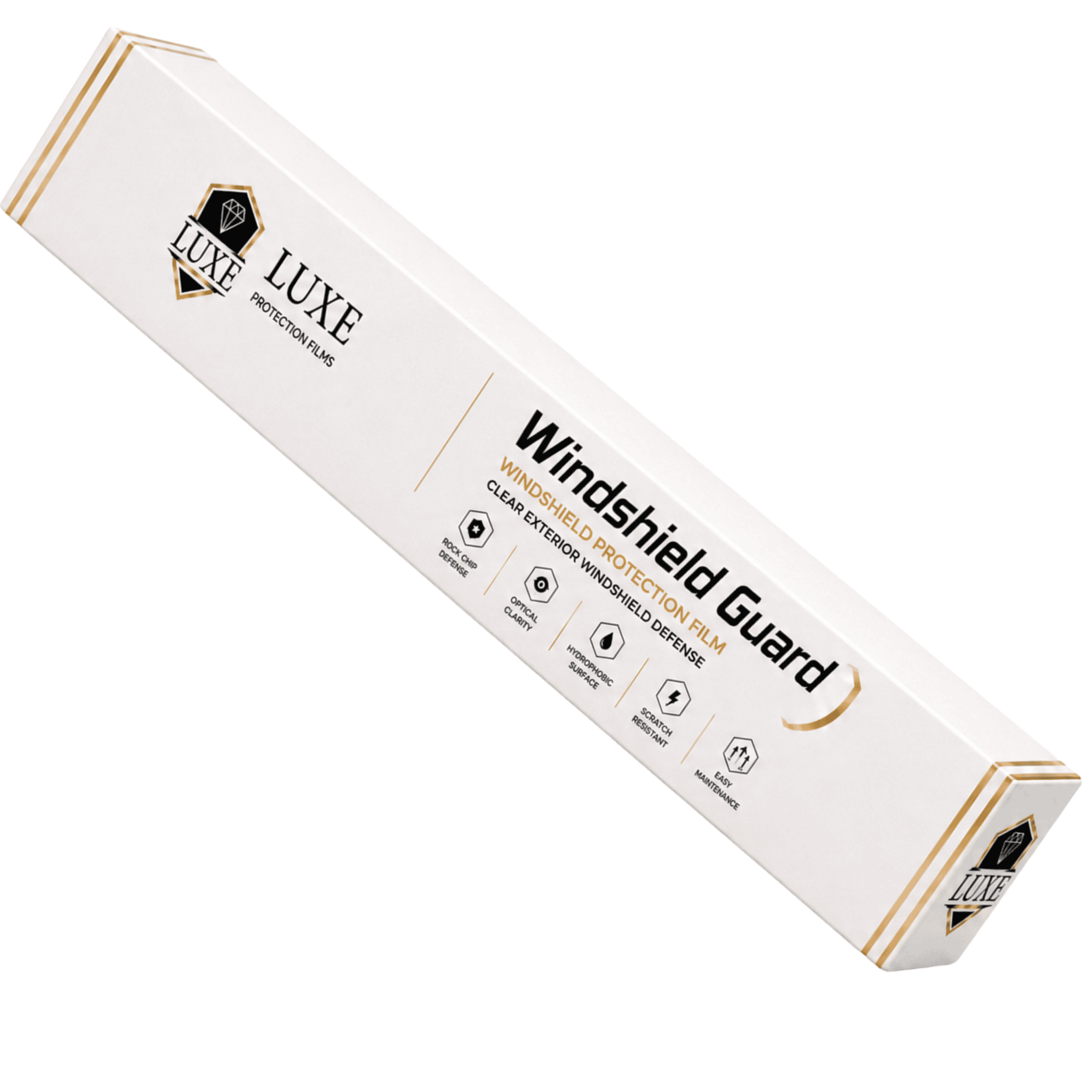
Windshield Guard is a self-healing TPU film applied over the factory glass. It absorbs the impact energy that would otherwise chip or crack the windshield, and it takes the sand, grit and road debris that cause long-term pitting.
- Rock-chip and crack defence through impact absorption.
- Self-healing — minor scratches and surface swirls fade with heat.
- Distortion-free visibility and a factory-clear view through the glass.
- Hydrophobic, easy-clean finish that sheds water and cleans up quickly.
- Available as professional rolls for installers and vehicle-specific pre-cut kits.
Eligible installations are backed by a 10-year limited warranty, subject to registration and the usual coverage terms and exclusions.
Where it fits in your existing packages
The easiest version of this sale is not a separate service — it’s a line item on quotes you are already writing. Three placements work particularly well:
| Placement | How to position it | Why it lands |
|---|---|---|
| Add-on to a full PPF wrap | “Finish the job — the glass is the one panel we haven’t covered.” | The customer has already bought the protection argument |
| Add-on to a front-end package | “Everything that hits the bumper hits the glass too.” | Front-end buyers are explicitly worried about road debris |
| Standalone for high-mileage drivers | “How much highway do you drive?” | Commuters and fleet drivers see the pitting problem themselves |
Talking about it honestly
Credibility closes more jobs than enthusiasm does. Windshield film reduces risk — it is not a force field. A large stone at highway speed can still do damage, and a poor installation will still look like a poor installation.
Say that out loud before the customer asks. Explaining a product’s limits is what makes the rest of your claims believable, and it protects you from the conversation nobody enjoys six months later.
Getting the install right
- Decontaminate properly. Glass holds bonded contamination that a wash will not remove — anything left behind shows through a clear film.
- Control your environment. Dust is more visible on glass than on paint because light passes through it.
- Use a consistent slip solution. Controlled slip is what lets you position the panel once and squeegee out cleanly rather than fighting the adhesive.
- Work the edges deliberately. Cowl and trim lines are where lifting starts.
- Register the warranty before the customer leaves.
Consistency is a supply problem, not just a skill problem. LUXE Glide InstaGel is built for controlled slip and streak-free release, and stocking one slip solution across every bay removes a variable from your finish quality.
Frequently asked questions
Does windshield film distort visibility?
It should not. LUXE Windshield Guard is made for distortion-free visibility and a factory-clear view. Optical quality is exactly why installation cleanliness matters more here than on paint.
Will it interfere with wipers, sensors or ADAS cameras?
The film goes over the glass and is designed for normal use, but always follow the vehicle manufacturer’s guidance for camera and sensor areas and confirm the pattern accounts for them.
Can it be removed later?
Yes — it is a protective layer over the glass, and removal is a professional job. That is the point: the film takes the damage instead of the windshield.
Is it worth it if the customer already has a chip?
Existing damage will not be repaired by the film. Deal with the chip or replacement first, then protect the new glass — which is often the easiest version of this sale you will ever make.
Rolls or pre-cut kits?
Pre-cut kits are faster and more predictable on common vehicles. Professional rolls give you coverage on anything without a pattern. Most shops keep both.
Add windshield protection to your line-up
Professional rolls and vehicle-specific pre-cut kits, with dealer pricing, installer training and warranty registration behind them.