
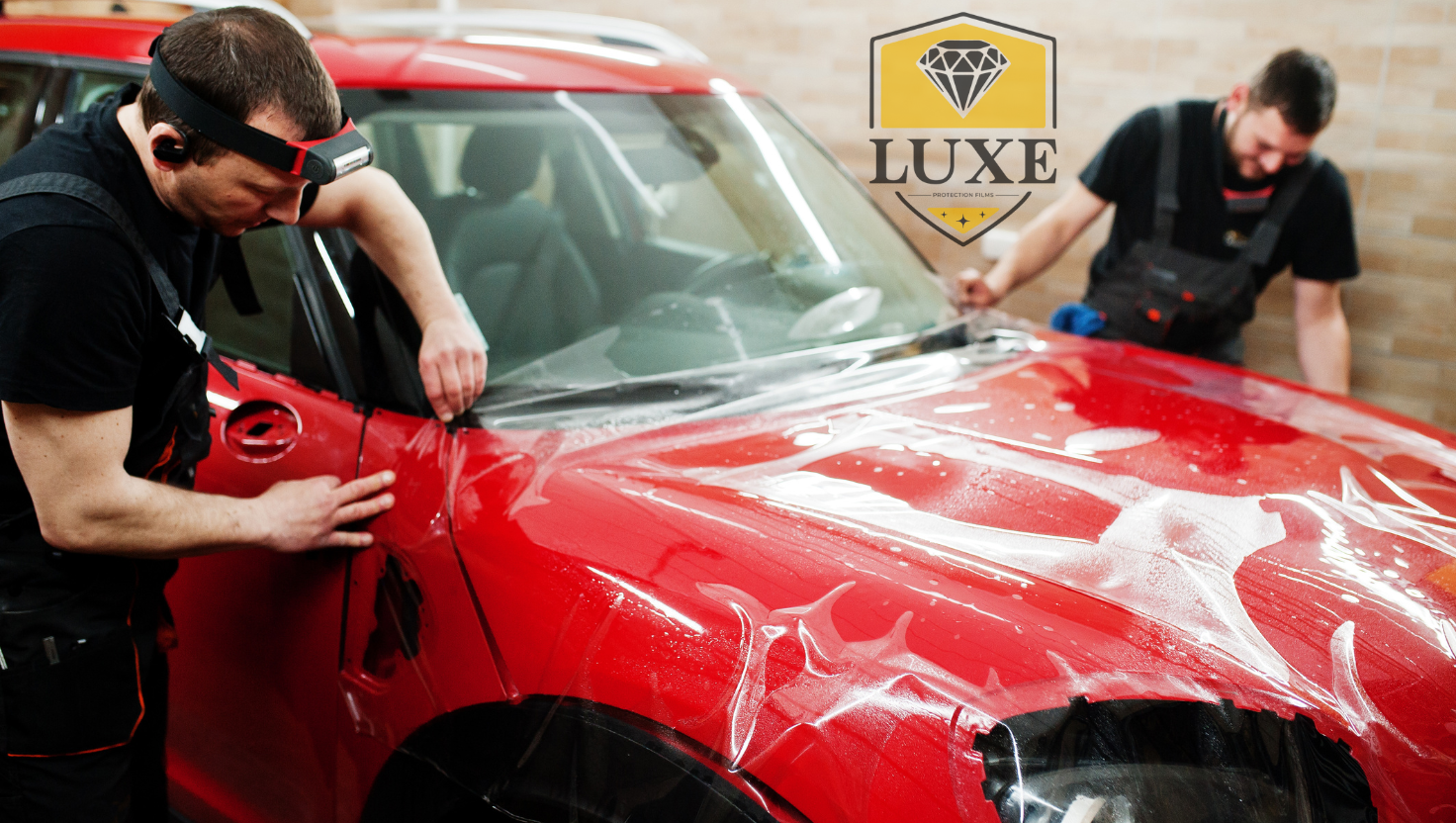

Two shops can charge the same price for the same car and walk away with completely different profit. The difference usually isn’t the film — it’s how the film gets cut.
Bulk roll or pre-cut kit is the single biggest workflow decision a PPF shop makes. It sets your material waste, your bay time, how quickly a new tech becomes useful, and how often you eat a panel because someone mis-plotted a mirror cap. Here’s how the two actually compare in a working shop.
The real cost of a PPF job isn’t the film
Film is the visible cost, so it’s the one owners fixate on. But on a typical full-front install, the money leaks in three quieter places: material you trimmed off and threw away, hours the car occupied a bay, and any panel that had to be redone.
That last one is the killer. A single re-do on a hood can wipe out the margin on the whole job — you pay for the film twice and the labour twice, and the customer still leaves at the original price. Any workflow decision has to be judged on how often it causes rework, not just on what the roll costs.
Track this number: profit per bay-hour, not profit per job. A $3,500 install that ties up a bay for two days can be worth less to your shop than two $1,400 front ends turned around the same day.
Bulk roll: maximum control, maximum responsibility
LUXE films ship in 60″ × 50 ft rolls, which is the format most experienced installers prefer. You cut what the car actually needs, you decide the wrap edges, and you can run coverage a plotter pattern would never give you — full wrapped edges, custom partial lines, odd body kits, anything aftermarket.
Where bulk roll wins
- Coverage you control. Wrapped edges and tucked lines are a selling point, and they only exist if you cut for them.
- Odd vehicles. Modified cars, older models, and anything with aftermarket bodywork rarely have a good pattern available.
- Lower film cost per square foot when your yield is genuinely good.
Where bulk roll costs you
- Yield depends entirely on the installer. The same roll can go a very different distance in two sets of hands.
- Slower ramp-up for new techs. A tech who can install cleanly still needs time before they can cut economically.
- Mistakes are expensive — a bad cut is film you have already paid for.
Pre-cut kits: speed and predictability
Vehicle-specific pre-cut kits — LUXE Windshield Guard is offered this way alongside professional rolls — take the plotting decision off the shop floor. The pieces arrive shaped for the car.
Where pre-cut wins
- Predictable material cost per job. You know the film cost before the car arrives, which makes quoting far safer.
- Faster installs on common vehicles, because nobody is measuring or plotting.
- A newer tech becomes billable sooner — the skill shifts from cutting to laying film well.
- Consistency across bays. Every install of the same model comes out the same.
Where pre-cut costs you
- Coverage is fixed. If the pattern stops short of an edge, that’s where your install stops.
- Pattern availability limits which cars you can take this way.
- Higher cost per square foot than roll film used efficiently.
Roll vs pre-cut vs hybrid, side by side
| Approach | Material waste | Bay time | Tech skill needed | Best fit |
|---|---|---|---|---|
| Bulk roll | Depends on the cutter — can be excellent or brutal | Higher: measuring and plotting on the clock | High | Full customs, modified cars, wrapped-edge work, experienced crews |
| Pre-cut kit | Low and predictable | Lower: film arrives ready | Moderate | High-volume common models, newer techs, windshield and front-end packages |
| Hybrid | Low on volume work, controlled on customs | Balanced | Mixed crew works | Most multi-bay shops |
The hybrid approach most profitable shops actually run
In practice the argument is usually settled the boring way: shops run both. Pre-cut handles the cars that come through constantly and the add-on work — windshields, front ends, high-touch panels. Bulk roll handles the customs, the wrapped-edge jobs, and anything without a decent pattern.
That split does two useful things. It puts your least experienced hands on the most forgiving work, and it keeps your senior installer on the jobs that actually justify their hourly cost.
- Sort last year’s jobs into “common vehicle” and “custom” buckets.
- Move the common bucket to pre-cut and measure bay time before and after.
- Keep roll stock for customs and for any job where wrapped edges are part of the pitch.
- Re-check the split every quarter as your vehicle mix changes.
Don’t forget consumables. Slip solution is part of your yield story too. LUXE Glide InstaGel comes in 32 oz bottles, 3-packs, 1-gallon refills, an Installer Starter Kit and a Complete Shop Kit — buying at the right format for your bay count quietly removes a recurring cost.
Four numbers worth tracking
- Profit per bay-hour by job type — not profit per job.
- Rework rate per installer, per month.
- Film used vs film billed on roll jobs.
- Quote accuracy — how often the final material cost matched what you assumed.
Frequently asked questions
Is pre-cut film lower quality than bulk roll?
No — it is the same film, cut differently. A LUXE pre-cut kit and a LUXE roll carry the same construction and the same performance. The difference is who does the cutting and where the coverage lines fall.
Can I still wrap edges with a pre-cut kit?
Only where the pattern allows for it. If wrapped edges are central to how you sell your work, keep roll stock for those jobs or choose patterns cut for wrapped coverage.
Which is better for a shop hiring its first extra installer?
Usually pre-cut, at least at first. It shortens the time before a new tech is producing billable work, and it limits how much an early mistake costs you in film.
Does the warranty change between formats?
No. Coverage follows the film and the installation, not the cutting method — registration and the usual terms and exclusions still apply.
Stock both formats from one supplier
Professional rolls, vehicle-specific pre-cut kits, and the consumables that go with them — with dealer pricing and installer training behind them.